Buy a Ready Made Company in Dubai Free Zone Step by Step
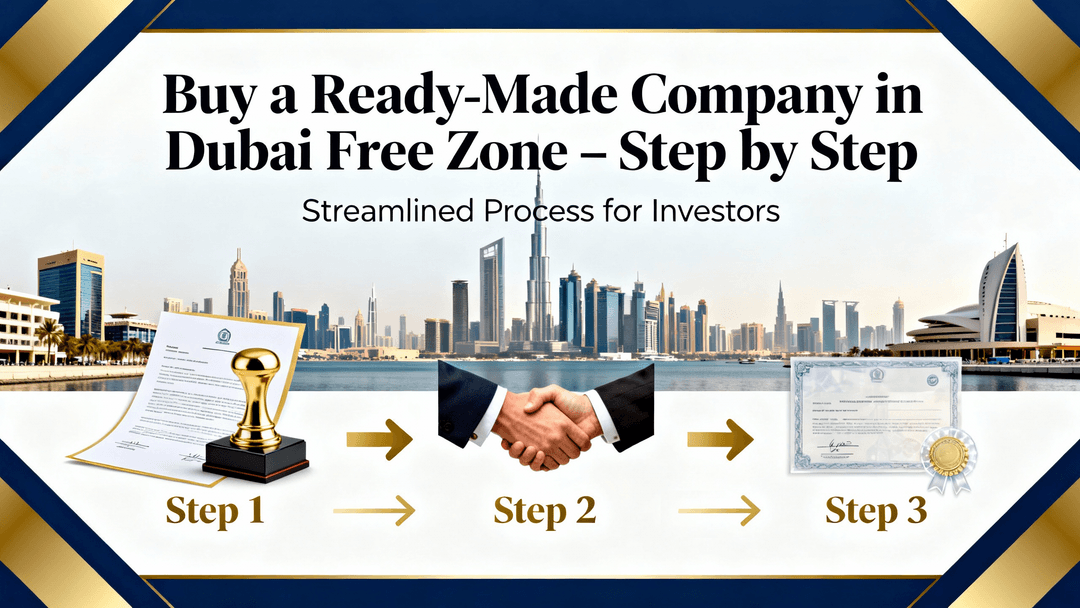
Starting a business in Dubai doesn’t always mean building from scratch. For entrepreneurs who need speed, credibility, or an immediate trading license, buying a ready-made company in a Dubai free zone is a smart and legal shortcut. These “shelf companies” are pre-registered with all paperwork in place—and can be operational in as little as 3–5 working days.
Here’s how to do it, step by step:
Step 1: Choose the Right Free Zone
Dubai has over 20 free zones, each catering to specific industries (e.g., DMCC for commodities, DIFC for finance, Dubai Silicon Oasis for tech). Pick one that aligns with your business activity. Most ready-made companies are available in DMCC, SHAMS, IFZA, and RAKEZ.
Step 2: Select a Pre-Approved Activity
Ready-made companies come with pre-approved business activities. You cannot change the core activity easily, so ensure it matches your plan (e.g., “general trading,” “consultancy,” “e-commerce”).
Step 3: Verify the Company’s Status
Work with a licensed business setup consultant or a trusted platform to confirm:
- The company is active and in good standing
- No hidden debts, fines, or legal disputes
- The license is valid and renewable
Step 4: Initiate the Share Transfer
The current owner (often a nominee shareholder) will transfer 100% of shares to you. This involves:
- Signing a share transfer agreement
- Updating the company’s MOA (Memorandum of Association)
- Submitting documents to the free zone authority
Step 5: Update Key Details
Once ownership transfers, you can:
- Appoint yourself as director/shareholder
- Open a corporate bank account
- Apply for visas (usually 2–6, depending on the package)
- Update the company name (if allowed by the free zone)
Step 6: Take Over Operations
You’ll receive the original license, MOA, share certificate, and Emirates ID (if previously issued). The company is now yours—ready to invoice, sign contracts, and operate legally.
Cost & Timeline
- Price range: AED 14,000 – 28,000 (depending on free zone and visa quota)
- Processing time: 3–7 working days
- Annual renewal: Same as new companies
Why choose this route?
- No waiting for name approval or activity licensing
- Instant credibility (company may already have a registration number and history)
- Faster bank account opening (some banks prioritize active licenses)
Many entrepreneurs use this method to secure a UAE presence quickly—especially for international contracts, investor visas, or e-commerce launches.
If you’re exploring options, platforms that list Business License Transfer opportunities allow you to browse verified, ready-to-buy companies with full documentation and transparent pricing.
With the right partner and due diligence, buying a ready-made company isn’t a shortcut—it’s a strategic advantage in Dubai’s fast-moving business landscape.
Is this blog helpful?
1
0
Popular Categories
Related Articles
Dubai’s Electric Vehicle Charging Infrastructure: A Strategic Leap Toward a Sustainable Future
Dubai is rapidly advancing its electric vehicle (EV) charging infrastructure as a cornerstone of its broader commitment to sustainable urban development. Spearheaded by the Dubai Electricity and Water Authority (DEWA), the emirate has significantly expanded its public EV charging network, with official statistics revealing a 40% year-over-year growth—surpassing 600 public charging stations across the city. <div class="my-2
Read Blog
How to Start a Mini Farm in Al Ain
Al Ain, known as the “Garden City” of the UAE, offers a rare opportunity for residents to reconnect with nature—right in the middle of the desert. Whether you dream of growing organic vegetables, raising a few chickens, or simply having a peaceful weekend retreat, starting a mini farm in Al Ain is not only possible but increasingly supported by local authorities. <p data-spm-anchor-id="a2ty_o01.29997173.0.i204.6762c9214Ga
Read Blog
The Transportation Network of the Future: Smart City and Mobility Revolution in Dubai
Dubai is turning its goal of becoming one of the smartest and most sustainable cities in the world into reality every day under the Dubai 2040 Urban Master Plan. The smart city concept implies not only technological infrastructure but also an integrated transportation network that enhances the quality of life for citizens. So, what smart steps is Dubai taking in the transportation sector? <div class="qwen-markdow
Read Blog